
First drop
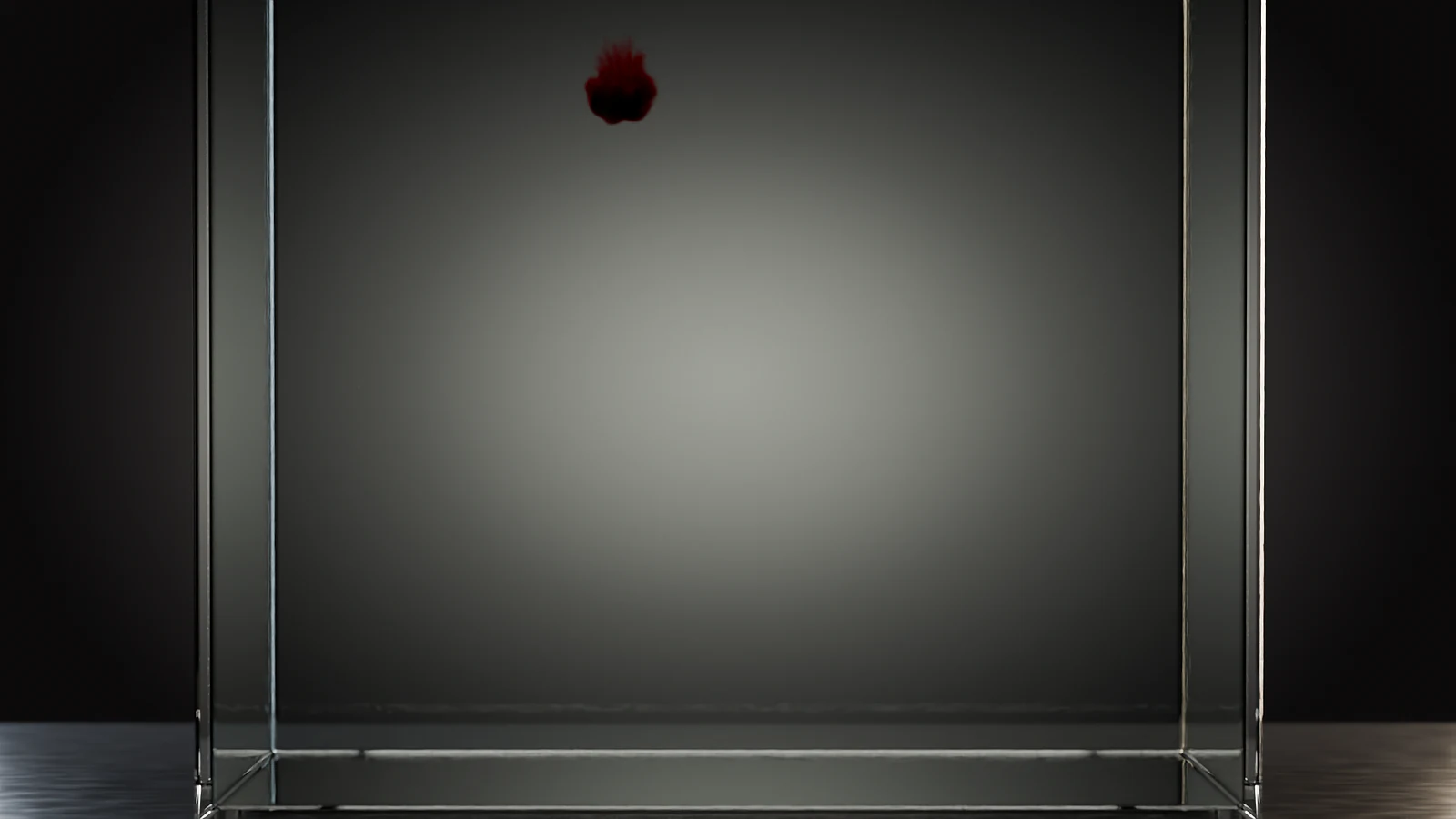
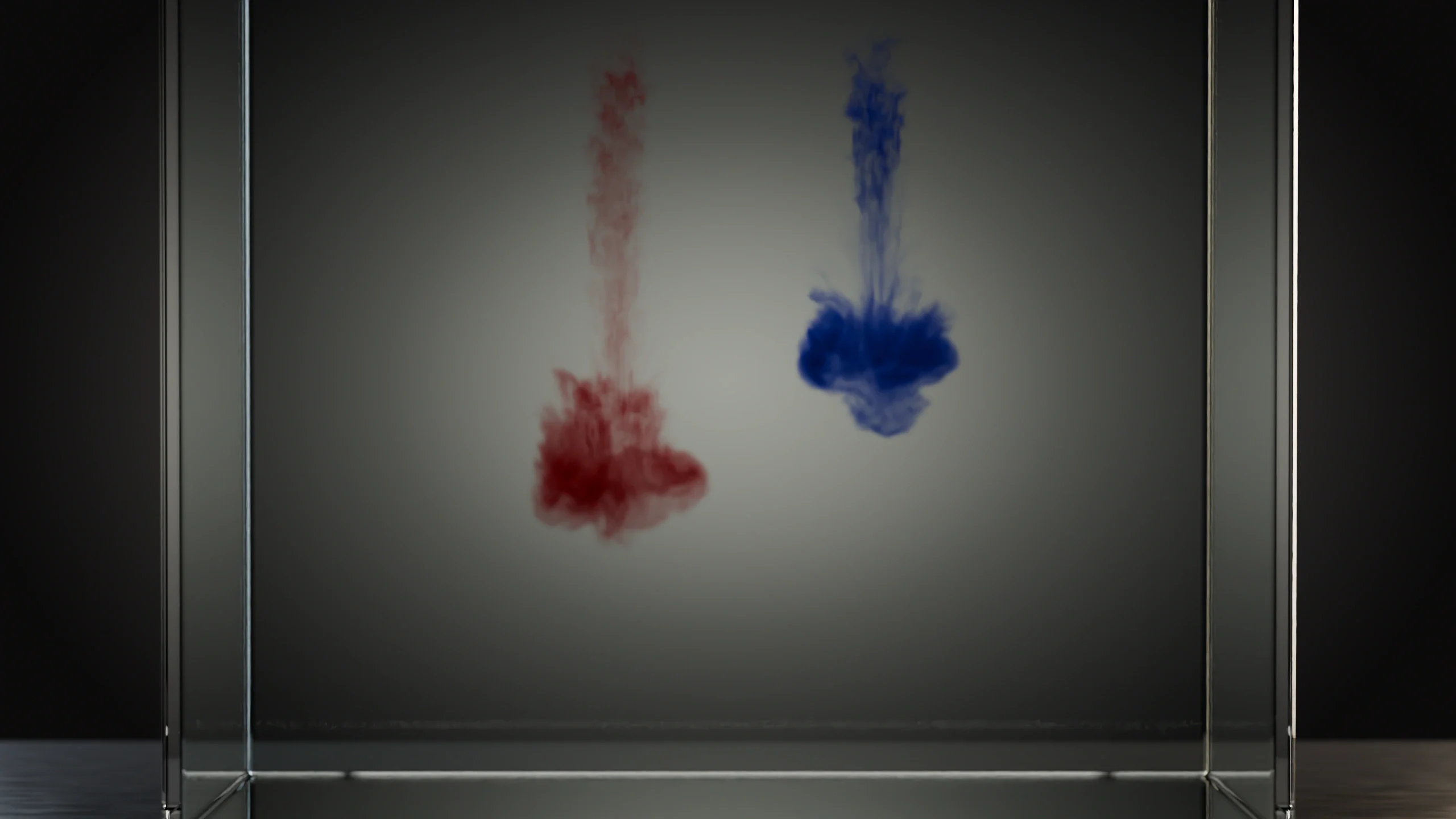
Nothing here is keyframed. A gas solver treats the ink as a heavy dye in still water: a small sphere pushes crimson downward for four frames, then the solver takes over.
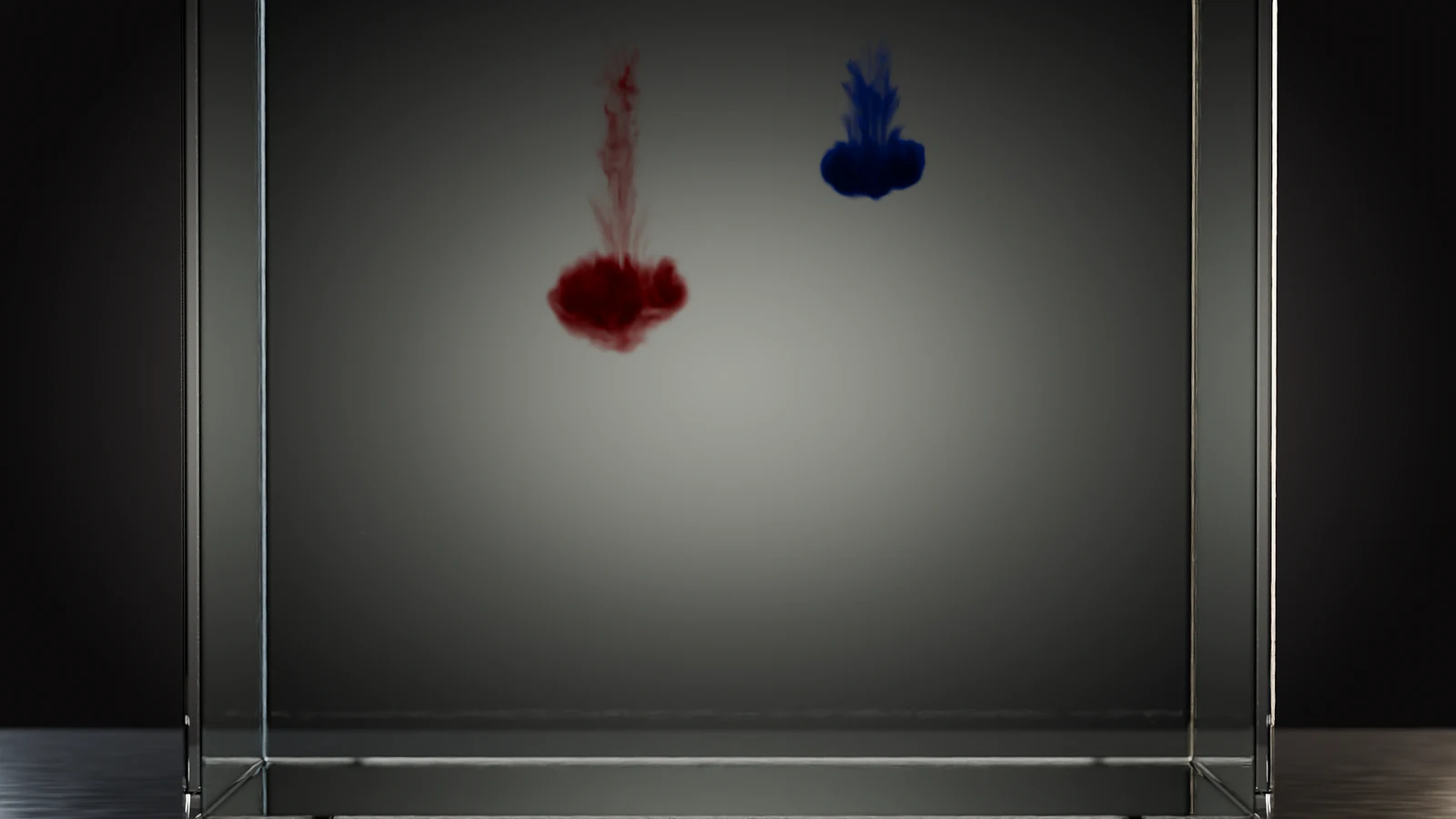
Vortex rings
The short push rolls each drop into a ring that drags a skirt behind it. Vorticity confinement feeds small eddies back into the flow so the curls don't smear out. The indigo drop follows 26 frames after the crimson.
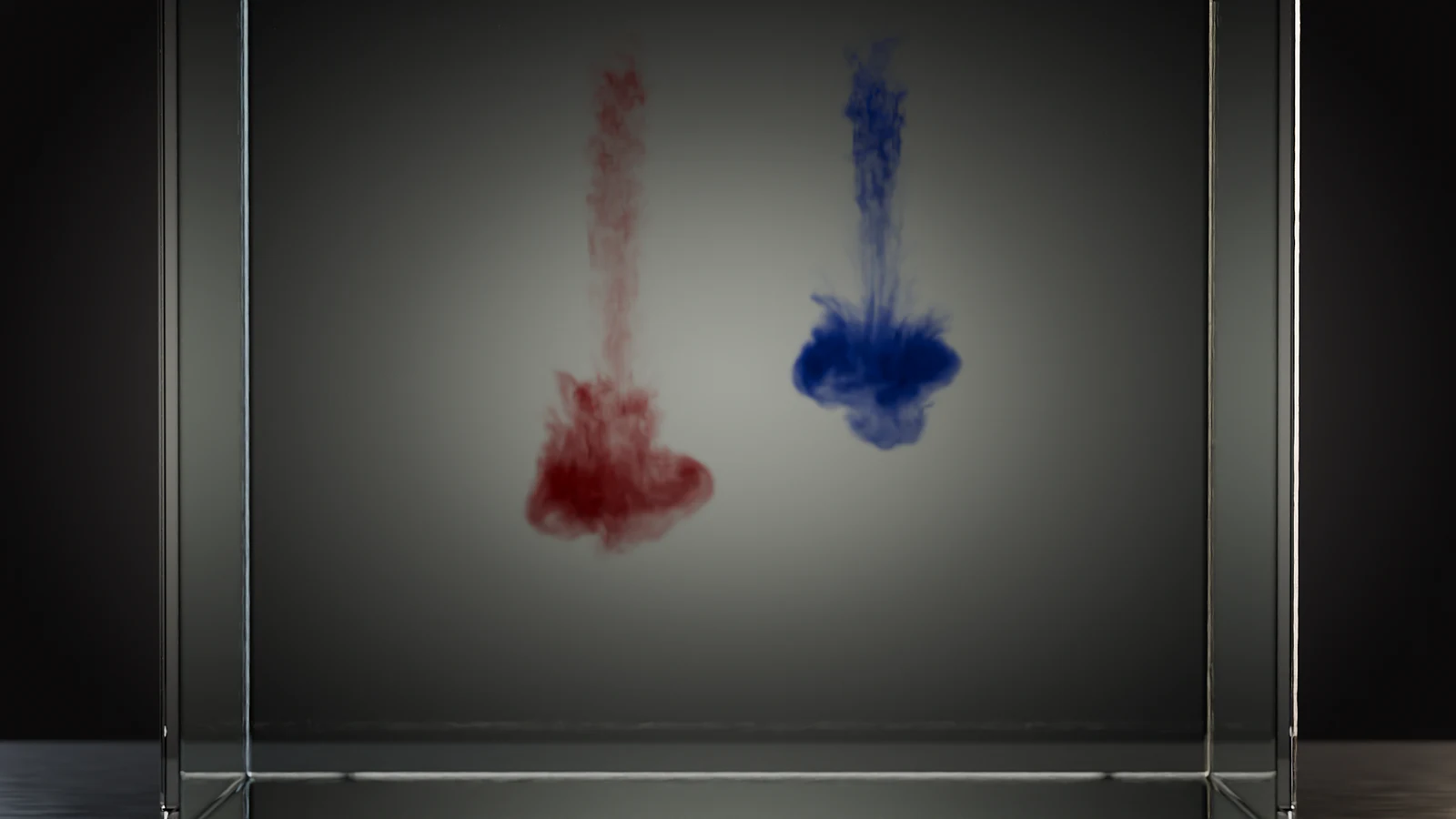
Strands
The solve runs on a 192 × 88 × 153 grid. A second pass doubles it to 384 cells across with wavelet noise, which breaks the trails into fine strands.
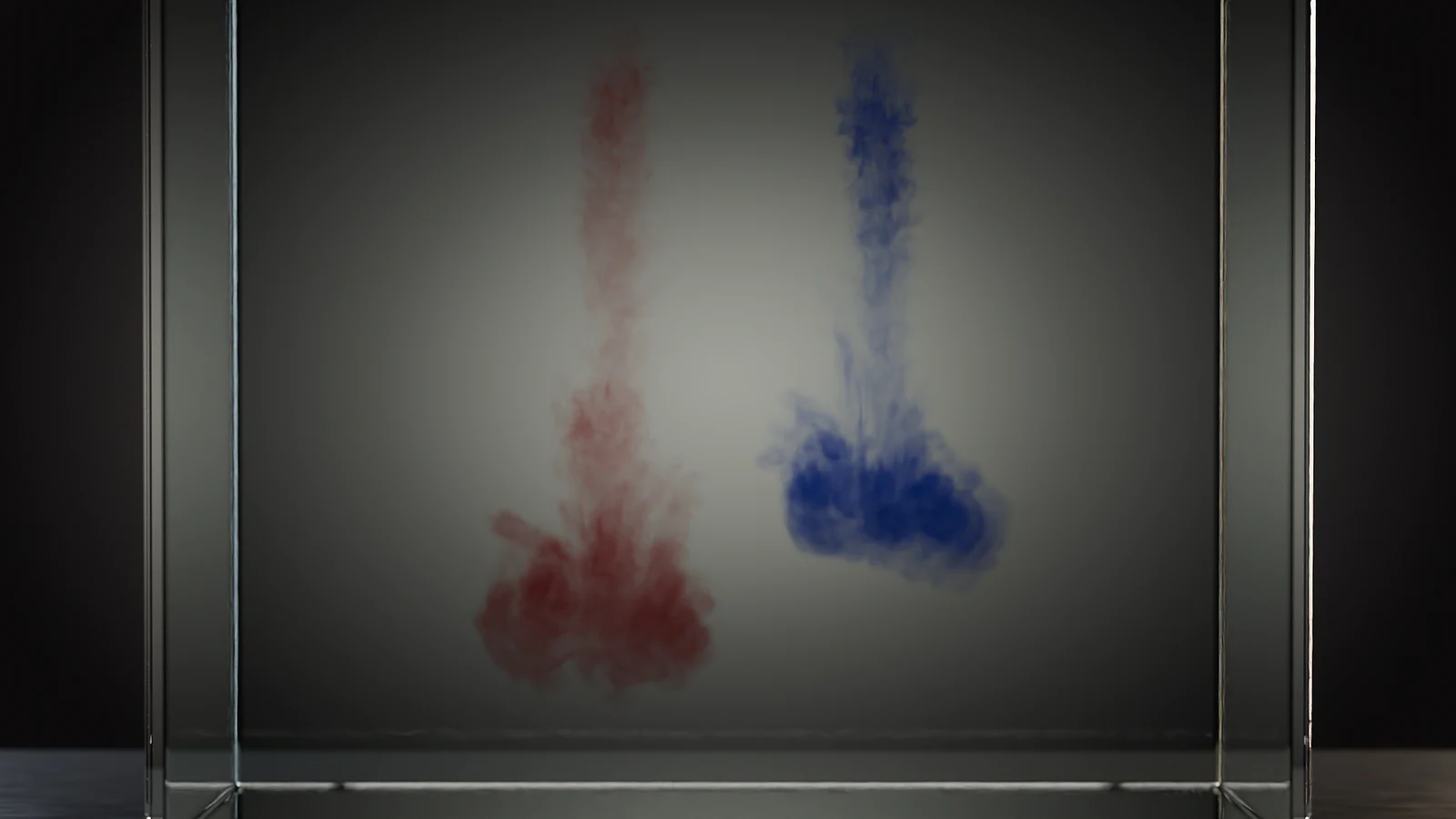
Backlight
The ink only absorbs light. A glowing panel behind the tank shines through it, so thin wisps tint the light and dense cores turn deep red and blue, as real ink does.
Breakdown
Simulation
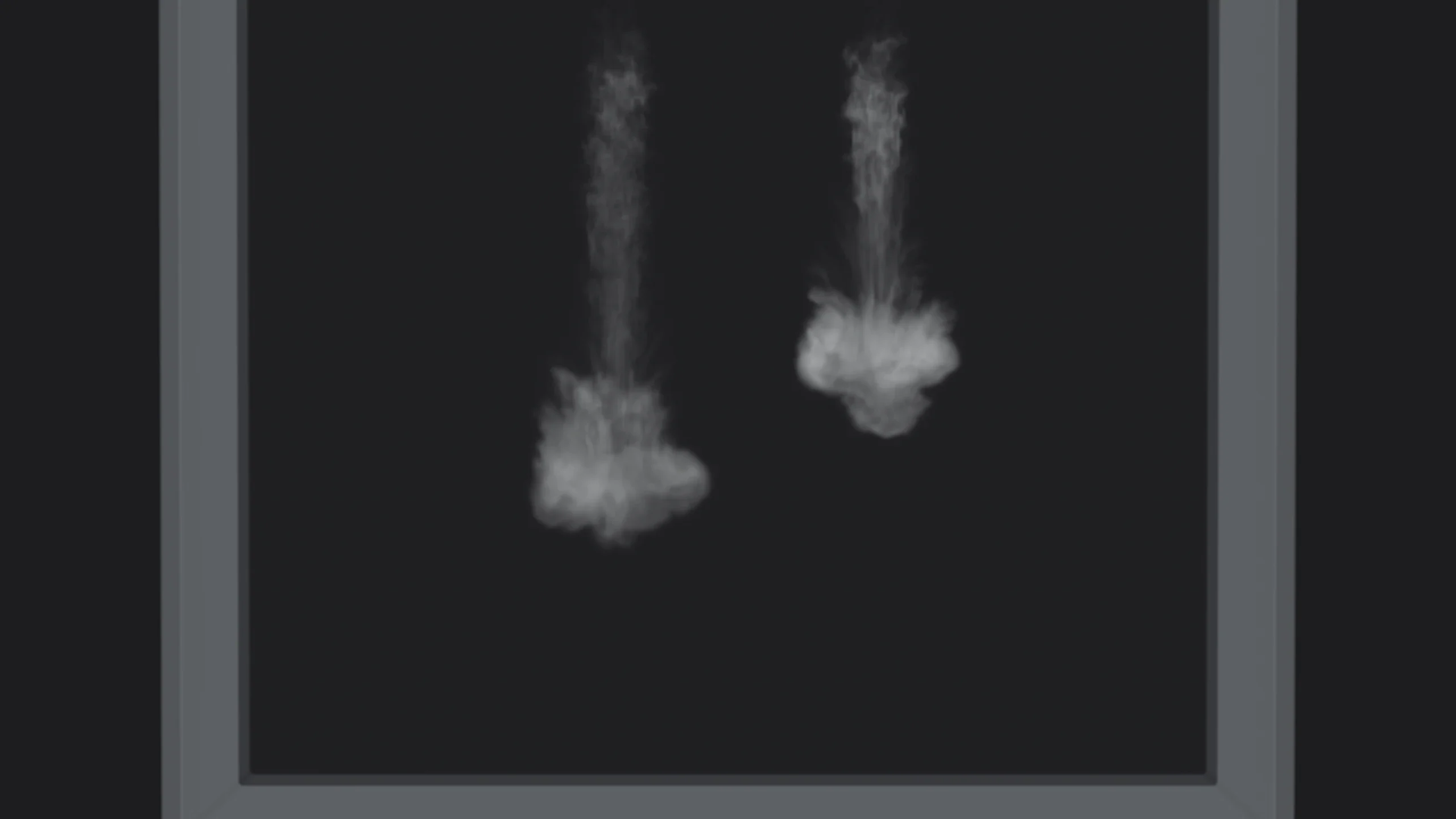
The bare simulation: ink density drawn as flat white smoke on black, with no lighting, colour or glass. This is what the solver hands over.
Render data
How it was made
Measured from the scene and the render logs
Hero
256
samples per pixel
samples per pixel: more samples, less noise
Sequence
150
frames
frames rendered one by one, then scrubbed by scrolling
Simulation
2,585,088
simulation cells
cells in the fluid grid (192 × 88 × 153)
Bake
11.7
minutes to bake
minutes to simulate all 150 frames
Colour
AgX
Medium High Contrast
the colour transform: how scene light becomes the pixels you see
Toolkit
- Software
- Blender 5.2.2 LTS
- Engine
- Cycles path tracing · OptiX
- GPU
- NVIDIA GeForce RTX 5070
the software and hardware behind every frame
