


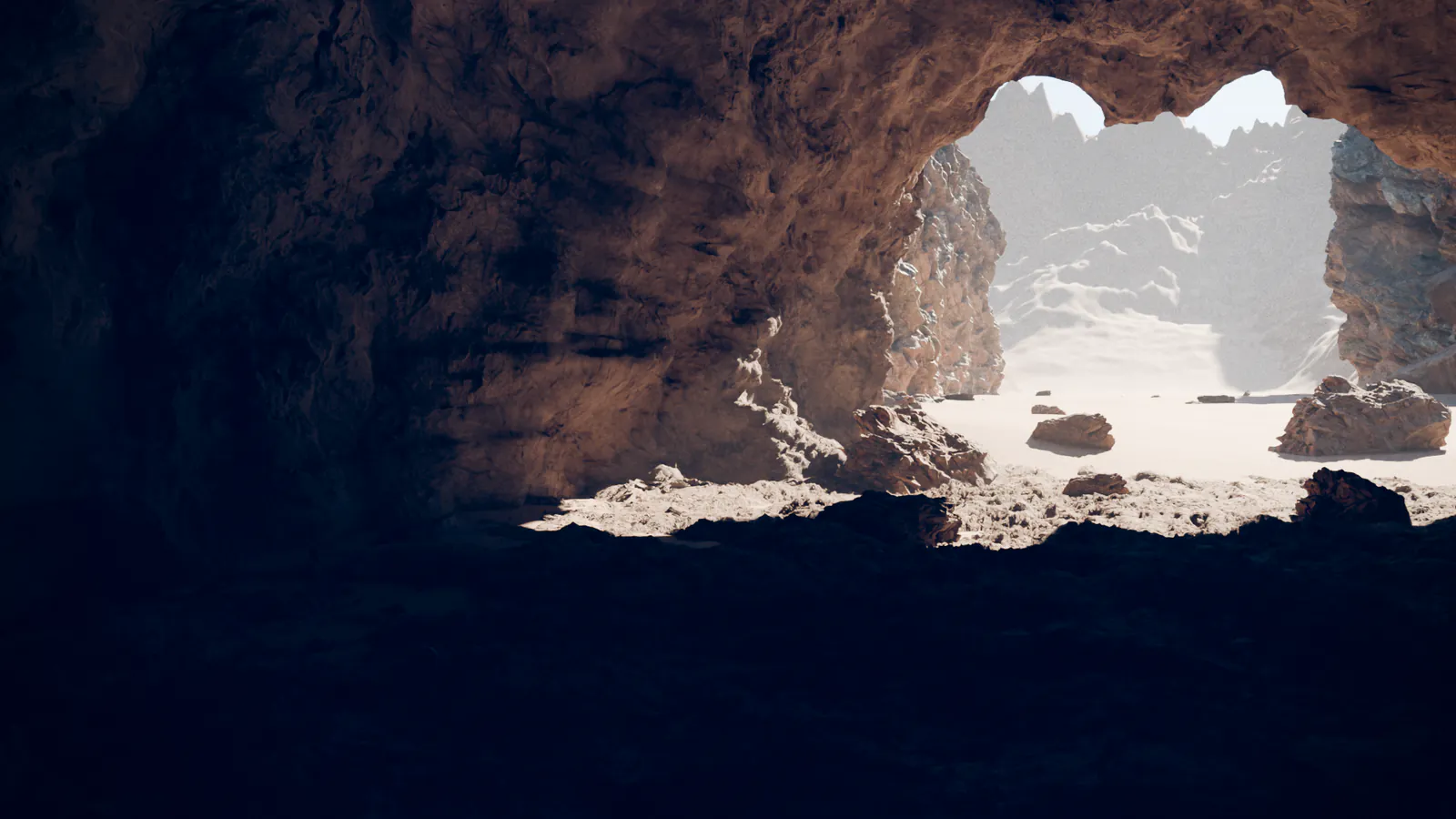
Cave shell
One closed mesh pushed out by noise and subdivided at render time against the camera, so the rock gets finer the closer you are, down to about a triangle per pixel.
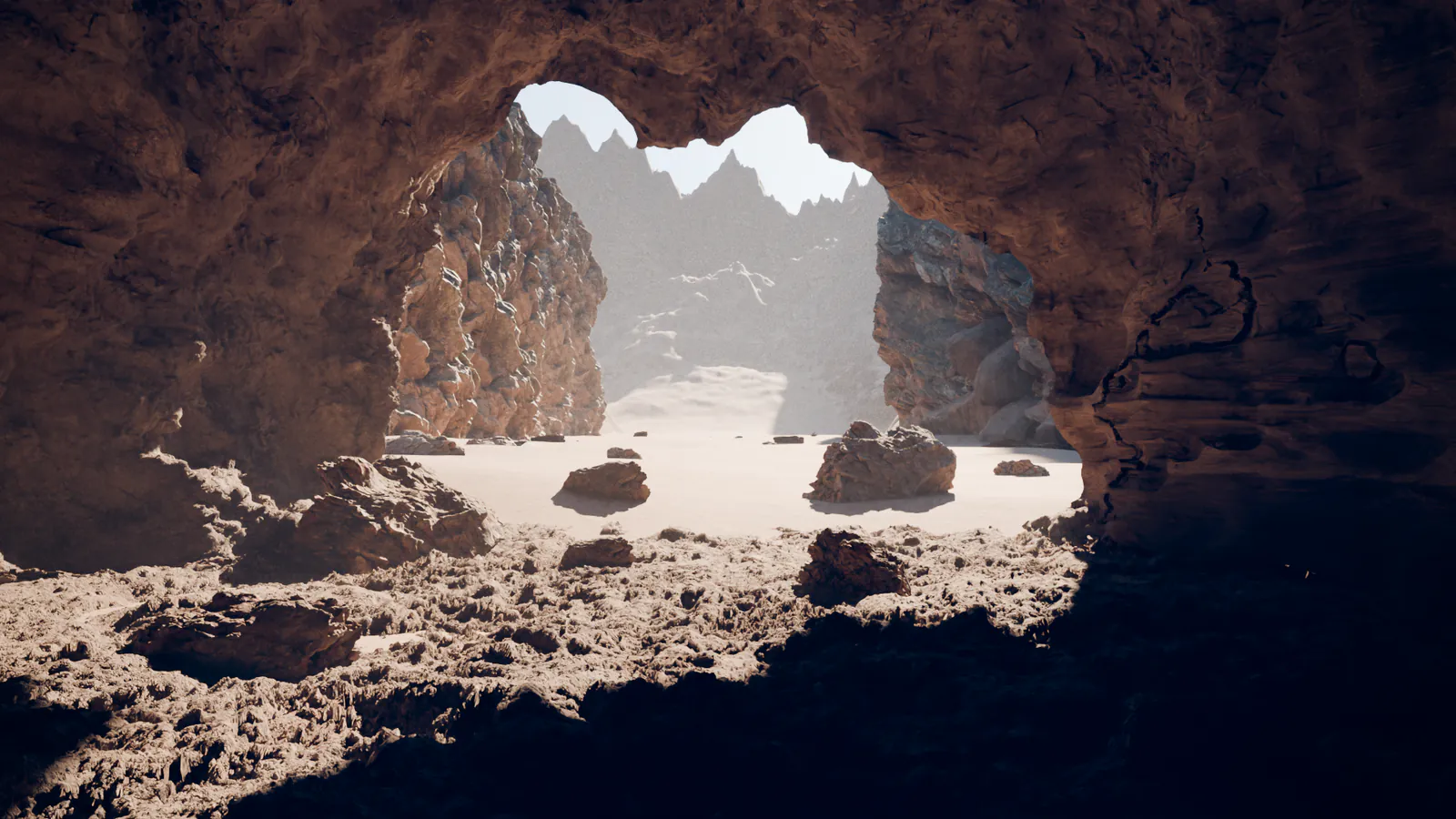
Light shafts
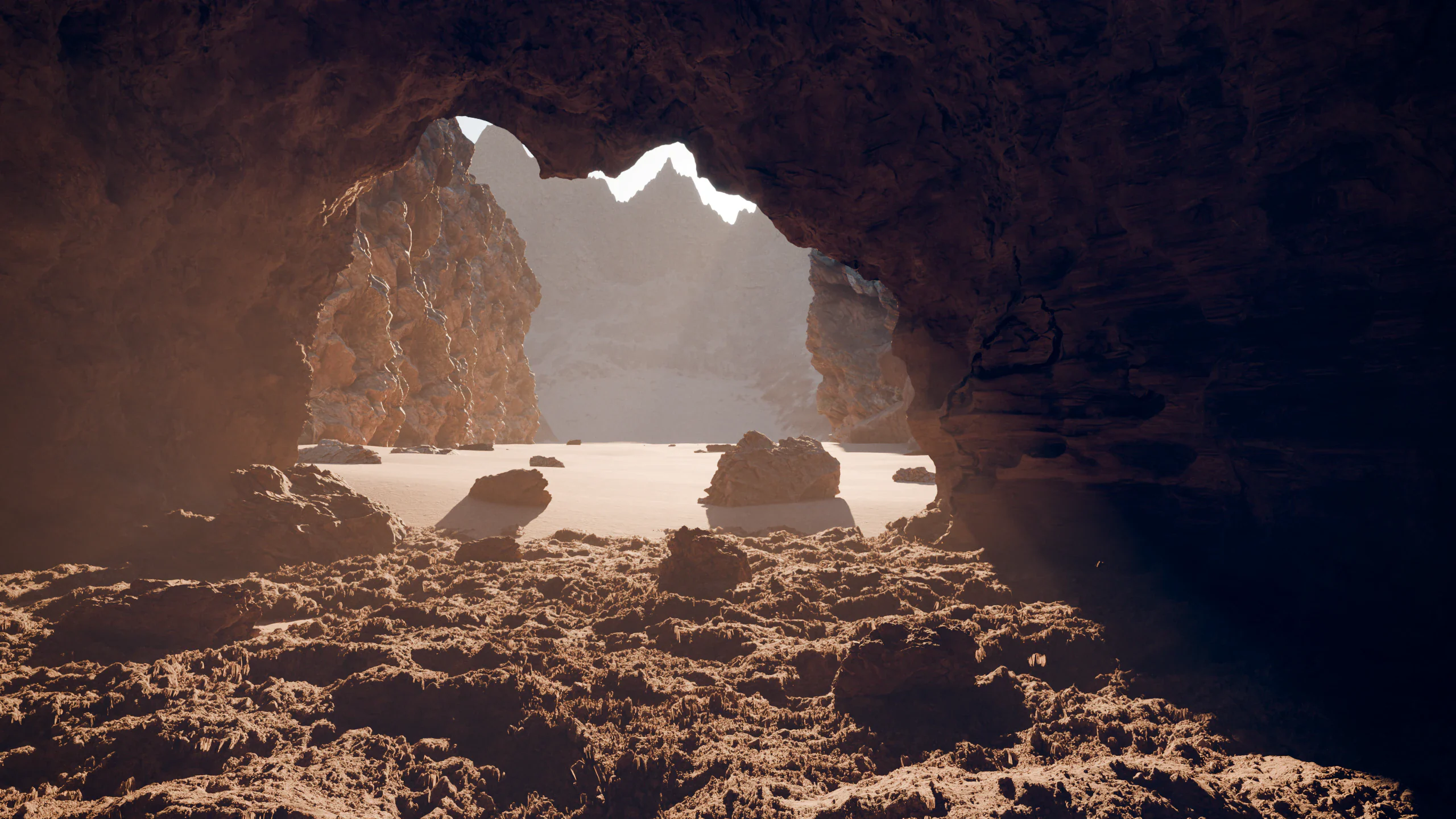
Haze fills a bounded box over the canyon and thins with height, with a denser pocket of dust in the cave mouth. Sunlight scatters through it into visible shafts.
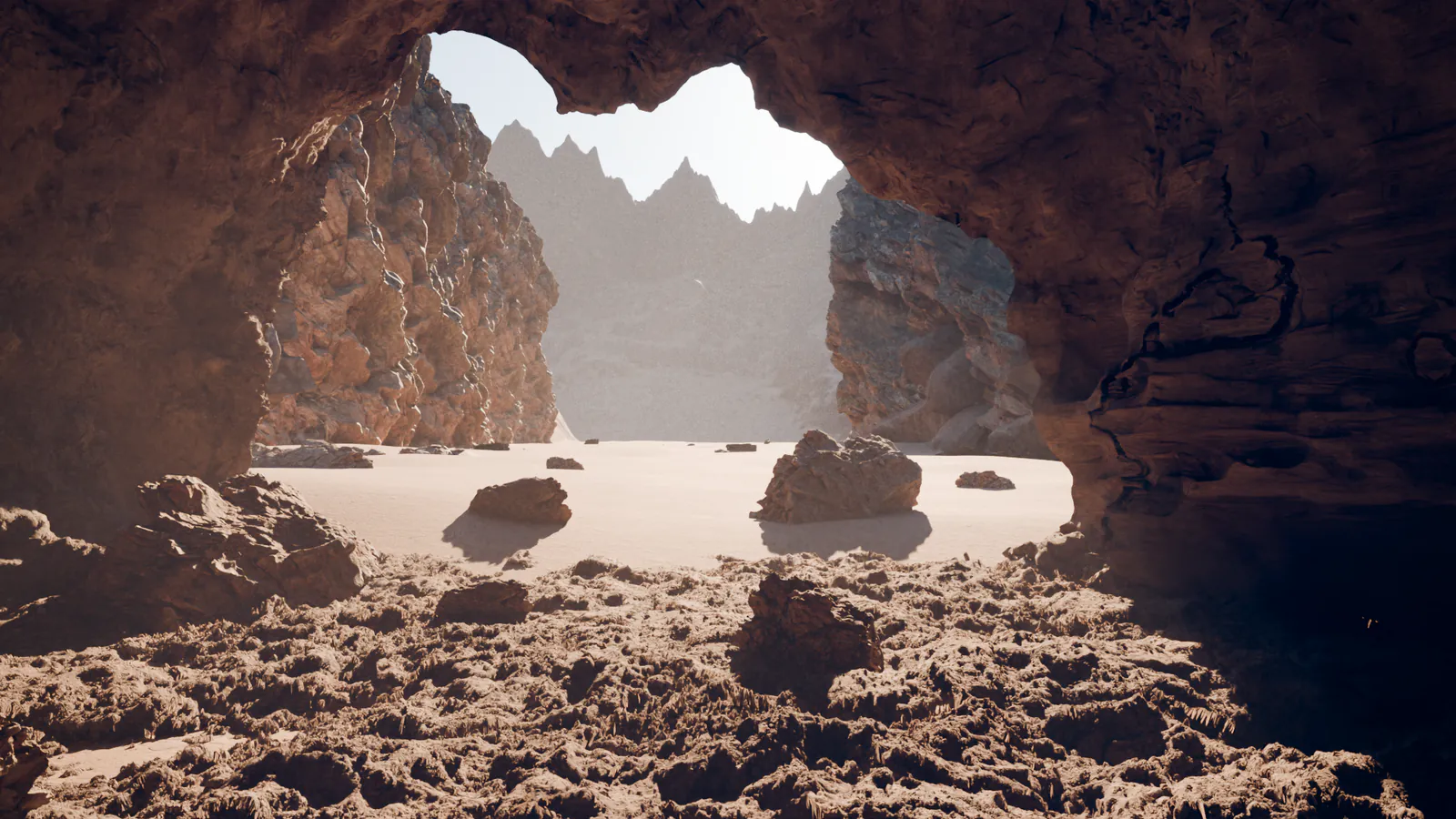
Scanned rock
The canyon walls and boulders are four photogrammetry scans, reused 59 times at different scales and rotations.
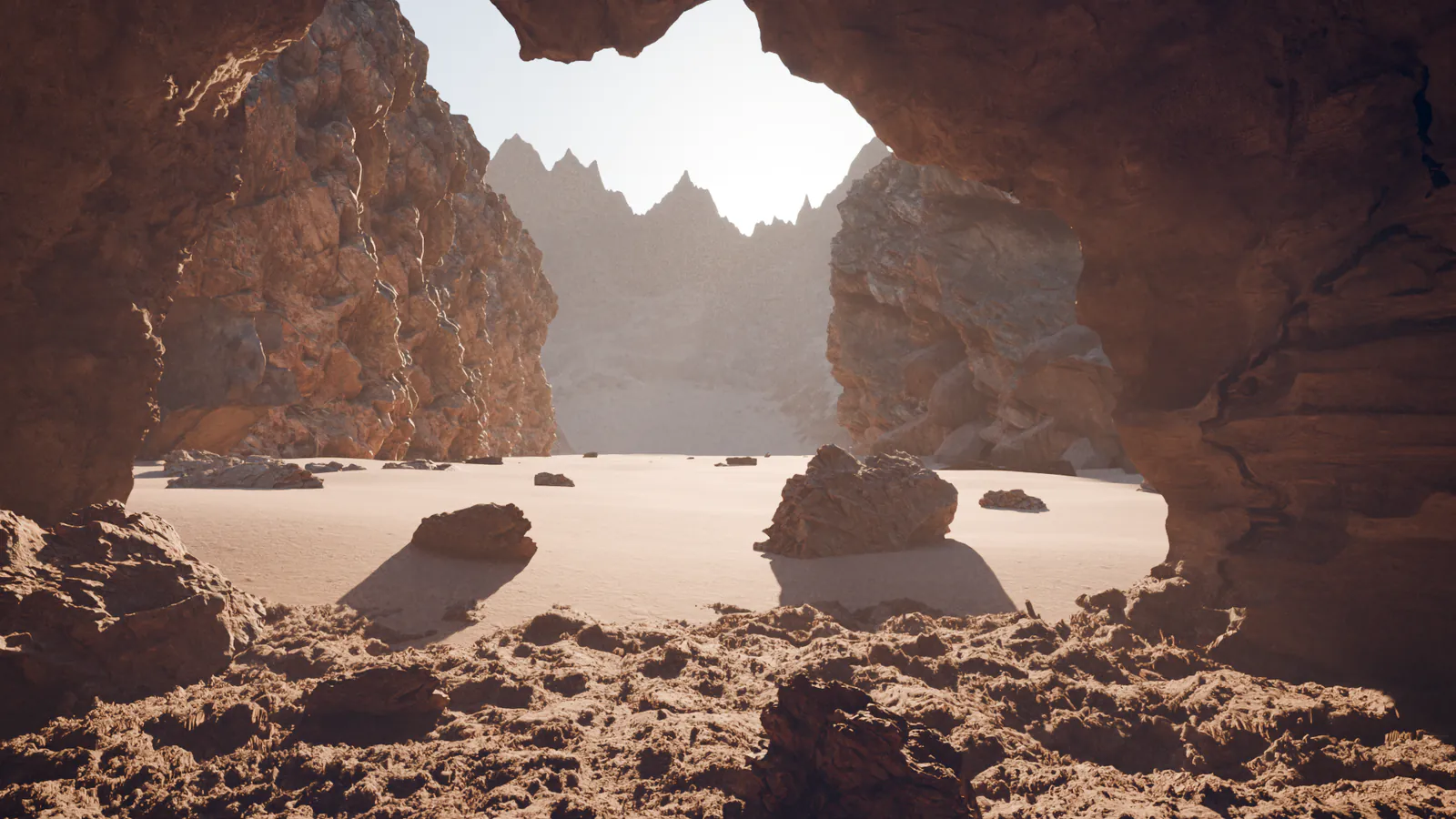
Golden hour
A physical sky and a matching sun sink from 34° to 16° over the scroll, so the light warms and the shadows stretch across the sand. Exposure eases down as the camera leaves the dark, like an eye adjusting.
Breakdown
Geometry
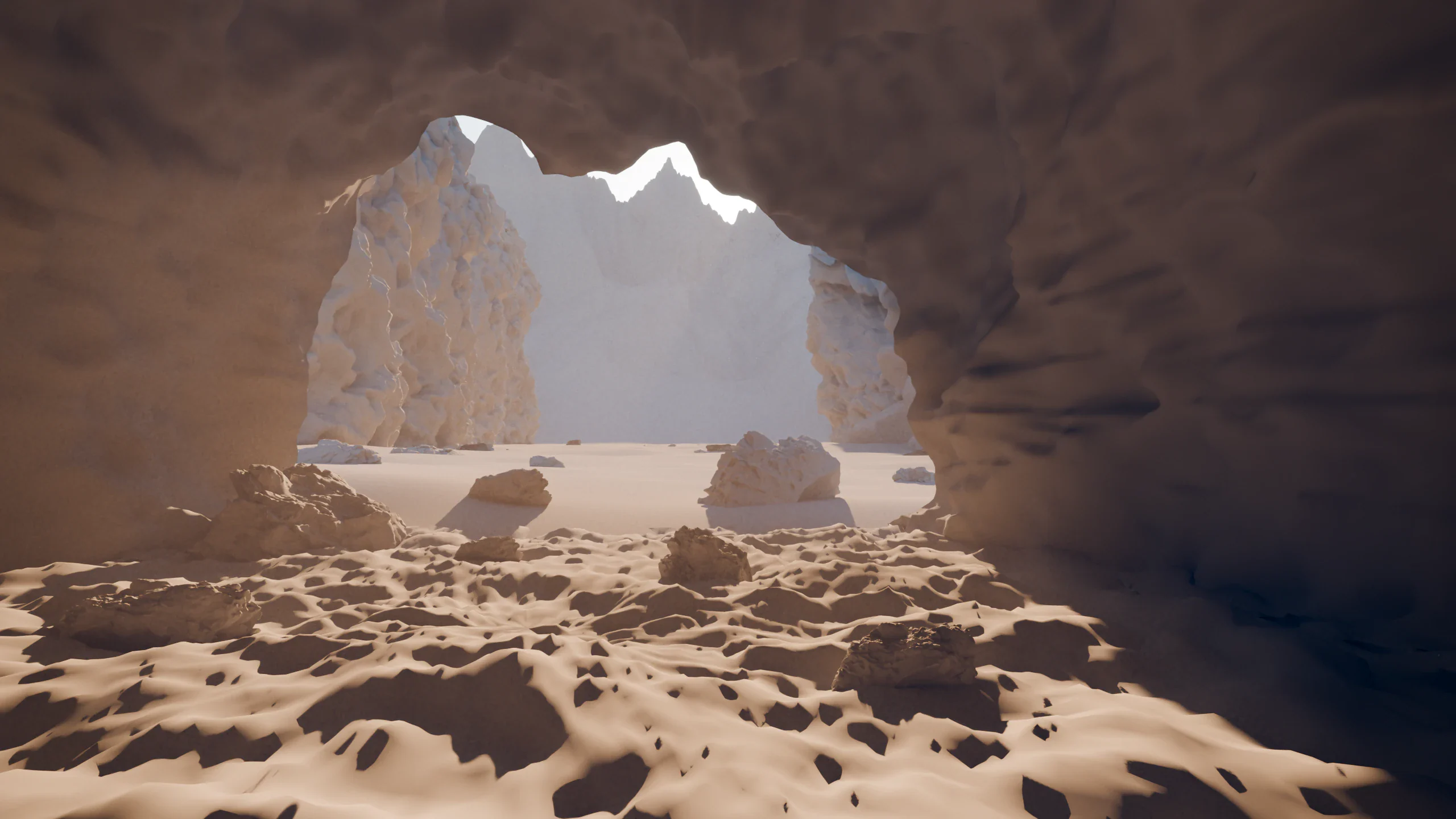
Clay: every surface the same grey under the same sun, sky and haze, so only the shapes and the light are left.
Render data
How it was made
Measured from the scene and the render logs
Hero
256
samples per pixel
samples per pixel: more samples, less noise
Sequence
100
frames
frames rendered one by one, then scrubbed by scrolling
Scene
6.6
million source triangles
triangles before the cave is subdivided
Scans
59
rocks placed from 4 scans
boulders and walls placed from only four scans
Colour
AgX
Medium High Contrast
the colour transform: how scene light becomes the pixels you see
Toolkit
- Software
- Blender 5.2.2 LTS
- Engine
- Cycles path tracing · OptiX
- GPU
- NVIDIA GeForce RTX 5070
the software and hardware behind every frame
